2013年4月27日土曜日

Hayman, Great Barrier reef, Australia

 There are many native English teachers in Japan. I had one who came from Australia. He was very friendly and potent in teaching English. When he went back to his home country, he gave me the book about Aussie's unique expressions which are different from UK's and US's.
 Yesterday, he gave me a mail for the first time in 3 years. He said he is working at a travel agency and provided me his status quo and some information of Australia.

 20 years ago, I went to Hayman island in Great Barrier reef. I enjoyed not only marine sports but also "The chef's table". The chef's table is the event where participating guests are invited to backstage into the main kitchen. The experience was as much an education as it was a wonderful gourmet experience. The Chefs provide commentary, explain food pairing concepts and themes, and answer questions from guests throughout the event.
  Some guests asked me my occupation and some questions about dentistry in Japan. An lady from Sydney said " The Chef's English is not so good. If you can't understand his comment, I will explain. Interpretation from local to standard English. haha."
 We shared stories and started new friendships among the guests.
According to its HP, some restaurants seemed to change in their style. I asked my former teacher to give information about the tour to Hayman island.


I want to feel young.....


the captain of the cruiser
only transportaion connects between the island and the continent
He was cool!

how relaxing!

Socialism in liberalism: Agony of Japanese dentists

 The moment when I see smile of my patients after treatment is the happiest one as a dentist. 10 years ago, a physician came to my dental office. His chief complaint was pain and swelling in the gum around his upper front tooth. After careful root canal treatment, his symptoms disappeared. I could see his smile in the end. Since then, there has been no troubles for a decade. X-ray showed good prognosis so far. But..........

 The cost of dental treatment in Japan is the lowest in the world (bar graph). Health ministry regulates the fee badly in Japanese medical insurance system. Furthermore, the fee of an experienced and skilled dentist is the same as that of an inexperienced and poorly skilled dentist. It's socialism in a liberal country. The more we treat in the system, the more we become in red. The red is compensated with some treatments which are not covered by insurance, such as ceramic crown, orthodontic treatment and implant. Treatment covered by insurance is like volunteer work. It's the agony of dentists in Japan.
before my treatment: note gray area (inflamation) around the tip of the root
already treated somewhere, but failure with swelling and pain

10 years after my treatment: note shrinkage of inflamation around the root tip
no symptoms since the treatment

2013年4月25日木曜日

Dental implants: 10 years after sinus floor elevation

 My friend's back teeth were lost due to decay. (He is a brain surgeon.) To carry out dental implants for him, I had to learn the way to generate bone in his sinus. An egg is a good material for practicing sinus floor elevation. I learned the technique in Michigan 10 years ago. Dentists who had the skill in Japan were rare in those days. Whenever I have patients who need the surgery, I make it a rule to practice with eggs before actual performance.

partially cut the shell without damage membrane inside


peel membrane from the shell without breaking

bone grafting

partially cut the bone without damage membrane inside

peel membrane without breaking

bone grafting and implant

before

10 years after
 

2013年4月24日水曜日

Memory of Michigan

When sorting out photos in PC, I found some in Ann Arbor. It's 10 years ago when I went there to study dental implant skills using cadaver at University of Michigan School of Dentistry. In Japan, education using cadaver is prohibited. Whenever Japanese dentists want to learn new techniques, models and pig jaws are only materials. Dr. Wong who is the first Asian professor in dentistry of US university opened the door to us Japanese. The seminar was designed to satisfy my thirst for knowledge and experience. When the tour to Ann Arbor was announced, I applied at the drop of hat. I was impressed to the fact that University of Michigan was like a small town, having various shops and crossroads. Japan does not have such a huge university. The dental course? It was very useful, of course! I wish I went back someday.
 
Detroit airport

University of Michigan is like a small town.

lecture by prof. Wong

2013年4月23日火曜日

Maruzen bookstore cafe

 Maruzen bookstore in Nihonbashi deals with foreign books. It is 5 minutes walk from Shouohkai dental office. There is a cafe on 3rd floor. The cafe is famous for omuhayashi.

 Omuhayashi is a combination of omurice and hayashi rice. Hayashi rice is a Western-style dish which is very popular in Japan. It’s a thick demi-glace sauce which often contains red wine, tomato sauce, beef, onions and button mushrooms.

 You can enjoy cherry blossoms in early spring from the cafe. Personally, time with books there is fabulous.
http://www.shouohkai-dental.com/english.html

2013年4月22日月曜日

Yakitori(skewer grilled chicken) restaurant in Nishi-Ogikubo

  I had dinner with my high school era's friend who lives in west Tokyo. He took me to a yakitori restaurant "Donn" in Nishi-Ogikubo along Chuo line.
 The average yakitori is made from several bite-sized pieces of chicken meat, or chicken offal, skewered on a bamboo skewer and grilled, usually over charcoal.
Diners ordering yakitori usually have a choice of having it cooked with salt (shio) or with tare sauce, which is generally made up of mirin, sake, soy sauce and sugar. The sauce is applied to the skewered meat and is grilled until delicately cooked.
 Quality of cuisine of this restaurant is excellent. The price is reasonable (around 3000yen per person). It really hits the spot!


chicken thigh and scallion(left) chicken meatball(right)

chicken thigh cooked with apricot, miso, etc

2013年4月21日日曜日

Basic English pronunciation training class in Shinjuku Tokyo 2

 A lot of Japanese can't distinguish pronunciation between "sea" and "she". Especially, "sea" is often pronounced as "she". So, when they want to say "Sit down.", they say "Shit down"! Awful!
 There is a tongue twister "She sells seashells by the seashore. The shells that she sells are seashells I'm sure." This is our good practice sentence to make precise pronunciation of "sea" and "she".
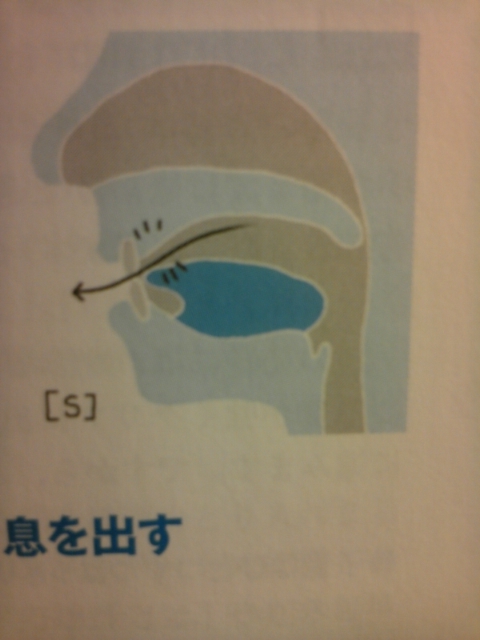
 Last Thursday, I attended the basic English pronunciation training class, after work. The class master gave a knack of tongue position, form of lips and breath. It is said that there are 43 sounds in English vowels and consonants. The number of common sounds in Japanese is only 5 to 6, meaning Japanese are not familiar with about 90% of English sounds.
 I have subscribed "The Economist" for 3 years since my English teacher from UK recommended, however, I can hear the voice "Back to the basics" in my mind.